
Choosing the right material can be the difference between a system that runs quietly for years and one that struggles from day one—I’ve seen both outcomes on shop floors and in test labs. When projects hinge on density, heat tolerance, or electrical behavior, tungsten and molybdenum alloys consistently rise to the challenge. Below, we cut through the noise and share where each alloy really shines—high-density tungsten for mass and shielding, W-Cu for thermal and electrical performance, and Mo-Cu for CTE-matched packaging—along with how these choices solve real industrial problems and how FOTMA supports them from manufacturing to application.
High-performance alloys, especially those built on tungsten and molybdenum, deliver capabilities that outpace conventional steels in harsh environments. Designed for extremes—temperature, radiation, wear—these materials keep processes stable where standard metals fall short. Knowing what sets them apart is the first step to optimizing performance and designing robust products.
High-density tungsten alloys (WHAs), typically 85–97% tungsten with nickel-iron or nickel-copper binders, achieve densities roughly twice that of steel. That mass translates into outstanding radiation shielding, which is why they’re staples in both medical and industrial settings. Beyond density, WHAs combine excellent machinability, high strength, and reliable corrosion resistance with strong dimensional stability—ideal for precision parts. We offer customized tungsten alloy counterweights and radiation shielding products tailored to these needs.
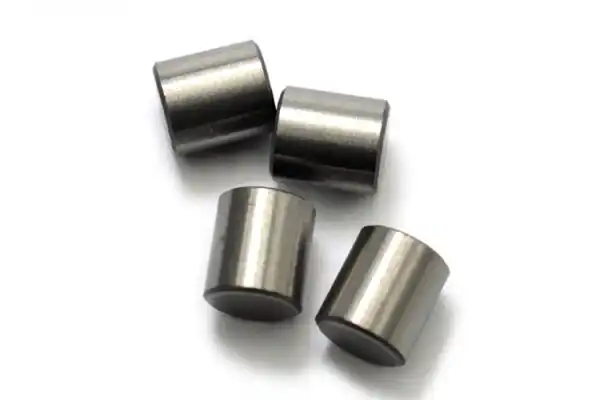
High-Density Tungsten Alloy (WHA) Properties:
| Property | Description | Typical Range (WHA) |
|---|---|---|
| Density | Extremely high, crucial for shielding and balancing. | 17.0 – 18.8 g/cm³ |
| Composition | Tungsten (W) with Ni-Fe or Ni-Cu binders. | 85-97% W |
| Machinability | Good, allowing for complex shapes and precise tolerances. | Excellent |
| Strength | High tensile and compressive strength. | Up to 1000 MPa (UTS) |
| Corrosion Resist | Good resistance to various corrosive environments. | High |
| Shielding | Superior absorption of X-rays and gamma rays. | Excellent |
| Dimensional Stab | Maintains shape and size under varying conditions. | High |
| Non-magnetic | Available in non-magnetic grades for specific applications. | Optional |
These traits make WHAs a go-to when you need substantial mass in tight spaces or efficient radiation attenuation. They’re frequently chosen over lead because they’re non-toxic and mechanically stronger. In aerospace, for instance, they serve as precise counterweights. We also provide Tungsten Alloy Radiation Shielding for various applications.
Tungsten-copper (W-Cu) alloys, produced via powder metallurgy, blend tungsten’s high melting point, density, and arc resistance with copper’s exceptional thermal and electrical conductivity. The result: materials that dissipate heat efficiently while carrying current reliably. We formulate W-Cu with tunable coefficients of thermal expansion (CTE) to match adjoining materials in electronic assemblies—a key factor in mitigating thermal stress and extending component life.
W-Cu also offers remarkable arc-erosion resistance, making it a strong choice for high-voltage switchgear contacts and EDM electrodes. Good machinability enables the complex geometries these parts often require. In high-power electronic packaging, where heat removal makes or breaks reliability, W-Cu is indispensable. We offer Wcu Tungsten Copper Alloy in various forms, including Copper Tungsten Alloy Rod and Copper Tungsten Plate Wcu Alloy Sheet. You can explore more about their applications in Comprehensive Applications Of Tungsten Copper Alloy In Aerospace And New Energy Vehicles.
Molybdenum-copper (MoCu) alloys combine molybdenum’s low CTE, high strength, and stability with copper’s excellent thermal and electrical conductivity. By tailoring the Mo/Cu balance, you get a CTE that aligns with semiconductor materials, minimizing thermal stress and preventing delamination in electronic packages. Alongside that, MoCu delivers strong heat spreading, mechanical rigidity, and practical machinability.
We offer customizable Mo/Cu ratios to meet precise thermal and mechanical targets. You’ll find these alloys in high-power electronic packaging—heat sinks and spreaders, semiconductor base plates, and MEMS—where removing heat quickly is essential for reliability and longevity. For a deeper dive, see Analysis Of The Outstanding Performance Of Molybdenum Copper Alloy And Cmc Three Layer Structure Materials.
Industrial environments don’t pull punches—high heat, corrosives, abrasion, and radiation can unravel the wrong material choice fast. The right alloy directly improves uptime, safety, and total cost of ownership. FOTMA develops materials specifically to withstand these extremes and keep operations on track.
WHAs excel at radiation shielding thanks to their high atomic number and density. Compared with lead, they often achieve the same attenuation with less volume, which is crucial in medical imaging, nuclear systems, and industrial radiography where space and safety margins are tight.
Their density also makes them ideal counterweights. Compact mass helps balance rotating assemblies in aerospace, automotive, and marine applications—reducing vibration, enhancing stability, and extending equipment life. We supply Tungsten Alloy Counterweights customized to your specifications for consistent performance and safety.
Tungsten carbide composites are a mainstay where abrasion, impact, and erosion would quickly dull or destroy other materials. Their extreme hardness, high compressive strength, and edge retention keep cutting tools and wear parts working accurately under punishing conditions.
We manufacture Carbide Cutting Blade and Tungsten Carbide Inserts designed for long service life in mining, construction, and manufacturing. In practice, this means fewer changeouts, less downtime, and better throughput. For more details, see Unveiling The Versatile World Of Cemented Carbide Products Powering Industries Across The Globe.
FOTMA’s alloys are built for reliability where heat or chemistry would quickly degrade conventional metals. Molybdenum and its alloys—such as Tzm Alloy—offer high melting points and strong high-temperature strength, making them suitable for vacuum furnace hot zones and heating elements. Their low CTE helps parts hold shape as temperatures climb.
In corrosive conditions, select nickel and titanium alloys deliver excellent resistance to acids, alkalis, and other aggressive agents. That durability prevents premature failures in chemical processing, marine hardware, and even medical implants. We customize these materials to meet the exact demands of your operating environment.
FOTMA, founded in 2004 and ISO-9000-1:2008 certified, focuses on high-quality tungsten and molybdenum products. With deep experience and advanced manufacturing, we meet stringent industrial requirements and deliver complete solutions—from mechanical processing and fabrication to precision instrument components.
We use modern production equipment and advanced testing to maintain quality at every step. Powder metallurgy gives us tight control over composition and microstructure—essential for composite systems like tungsten-copper and molybdenum-copper. We also apply specialized forming, machining, and finishing techniques tailored to refractory metals.
Our facilities handle complex geometries and tight tolerances, enabling a wide range of custom components. Continuous R&D investment improves both process efficiency and material performance, keeping us at the forefront of alloy technology and ensuring superior results for customers worldwide.
Quality isn’t an afterthought—it’s embedded in our workflow. We apply rigorous controls from raw material intake through final inspection. Our ISO-9000-1:2008 certification underlines that commitment. Comprehensive testing—chemical analysis, mechanical property evaluation, and non-destructive methods—verifies specifications.
An experienced technical team oversees each production stage to maintain consistency and meet customer requirements. We supply full documentation and certification for traceability and transparency, so you get predictable performance and durability with every delivery.
When standard grades aren’t enough, we collaborate to tailor solutions. Backed by over 30 years of technical accumulation, our core team adjusts compositions, refines processes, and develops new product forms to hit specific targets. We work closely with you to align materials and designs with performance goals.
Whether you’re optimizing thermal behavior, density, or high-temperature strength, we’re set up to deliver bespoke outcomes that improve throughput and reliability. Examples include Customized Copper Tungsten Products and Customized Molybdenum Parts.
From aerospace to electronics, tungsten, molybdenum, and their alloys offer decisive advantages wherever conditions are extreme or tolerances are tight. Their properties translate directly into safer, more reliable, and higher-performing systems.
In aerospace and defense, materials must be light where possible and unyielding where necessary. High-density tungsten alloys serve as precise counterweights in aircraft and missiles and help shield sensitive electronics from radiation. These roles demand exact mass control and dependable attenuation.
Molybdenum and Tzm Alloy feature in high-temperature structural parts inside jet engines and missile systems, thanks to their strength at elevated temperatures. Titanium alloys, valued for high strength-to-weight ratios, support airframe and engine components—reducing mass without compromising integrity. Together, these materials underpin safety and operational efficiency.
Thermal management and packaging live or die by the right material properties. Tungsten-copper and molybdenum-copper alloys are central to heat sinks and spreaders in high-power devices, pulling heat away to prevent failure.
CMC (Copper-Molybdenum-Copper) composites provide precise CTE matching, which is essential when bonding dissimilar materials in IGBTs, RF/microwave modules, and LED bases. We supply Molybdenum Copper Alloy Mocu Heat Sink and igbt heat sink substrates to achieve stable thermal performance and long-term reliability. You can learn more about these applications in Analysis Of The Outstanding Performance Of Copper Molybdenum Copper Cmc Electronic Packaging And Heat Sink Materials.
FOTMA’s high-density tungsten alloys are foundational for radiation protection in both medical and industrial environments. Their superior X-ray and gamma attenuation makes them ideal for collimators, syringe shields, and protective barriers in clinical settings, and for non-destructive testing systems, nuclear facilities, and waste containment in industry.
We supply Tungsten Alloy Radiation Shielding solutions that are non-toxic and environmentally friendly—strong alternatives to lead—while meeting strict safety standards. The result is effective protection that supports compliance and safeguards people and equipment.
We’re committed to delivering tungsten, molybdenum, and other non-ferrous materials that stand up to modern industrial demands. With rigorous quality control, advanced manufacturing, and deep technical expertise, we provide reliable, high-performance solutions. If you need specialized alloys or custom components, our team is ready to help. Contact us today to discuss your project and see how our materials can elevate your application. Reach out to us at bunny@fotma.com or export@fotma.com, or call us at +86 13995656368 or +86 13907199894.
Alex Chen is dedicated to ensuring clients receive timely solutions and achieve optimal performance from their products. Passionate about problem-solving and continuous improvement, Alex provides expert insights and practical guidance to help customers maximize the value of their purchases.
Steel is cost-effective and offers good strength and ductility, while tungsten alloys deliver much higher density, far higher melting points, and superior wear and radiation shielding. In extreme conditions, tungsten alloys keep performing where steel typically cannot.
Start with your priority properties—density, strength, thermal/electrical conductivity, wear resistance, and radiation attenuation—then narrow by operating environment and geometry. Our technical team can help map requirements to the right alloy and customize a solution where needed.
Lead time depends on design complexity, composition, and order volume. After reviewing your specifications, we’ll provide a clear timeline and maintain open communication from kickoff through delivery.
Yes. FOTMA is an ISO-9000-1:2008 certified enterprise. We ensure all tungsten and molybdenum products, including custom variants, meet relevant international standards and are backed by rigorous testing and certifications.
When combined with tungsten or copper, molybdenum improves high-temperature strength, lowers the coefficient of thermal expansion, and enhances thermal conductivity—key for components that must stay stable under heat and for efficient thermal management in electronics.