
After years of speccing high-heat hardware and negotiating buys, I have learned that thin tungsten sheets can make or break a build. When the environment runs hot, heavy, or unforgiving, tungsten’s behavior is predictable, and that reliability matters. My team digs into material science so our clients get exactly what they asked for, from tolerance to texture. What follows is a clear look at thin tungsten sheets, their properties, where they shine, and how to source them without surprises.
Tungsten stands out because of how its properties stack together for thin sheet work. The headline is its melting point, approximately 3422°C, the highest among metals, which keeps structures intact in intense heat. Its density is nearly twice that of lead, so you get serious mass in limited volume for inertia or radiation shielding. The strength-to-weight ratio holds up at elevated temperatures, which supports robust, lighter designs when every gram matters. It also brings solid electrical and thermal conductivity for electronics and thermal management. The low coefficient of thermal expansion (CTE) minimizes thermal stress and distortion in precision parts. Taken together, these traits make tungsten a go-to in high-performance applications where failure is not an option.
Purity and process drive how a thin tungsten sheet behaves. At 99.95% purity or greater, you see better ductility at lower temperatures and improved electrical conductivity. Even small impurities can trigger embrittlement, reduce thermal conductivity, and weaken creep resistance. Powder metallurgy followed by rolling or forging governs grain structure and final performance. Cold rolling adds work hardening, which boosts strength and hardness while cutting ductility. Annealing can recrystallize the sheet to bring ductility back, though strength may drop. Tight control of these steps lets us tune tensile strength, elongation, and surface finish to the application. I always ask for the full processing history, because that trail explains how the material will perform under load and heat.
Thin tungsten sheets come with a distinct property set that suits specialized work. Tungsten has an atomic number of 74 and an atomic weight of 183.84 g/mol. Its density is approximately 19.25 g/cm³, among the highest for engineering metals. The melting point is 3422°C and the boiling point is around 5930°C. Thermal conductivity is approximately 173 W/(m·K) at room temperature, and electrical resistivity is about 5.65 × 10⁻⁸ Ω·m. The coefficient of thermal expansion is around 4.5 × 10⁻⁶ /K, which helps parts stay dimensionally stable at temperature. Chemically, tungsten resists many acids and bases at room temperature due to a protective oxide layer. At elevated temperatures in air, it oxidizes readily to tungsten trioxide (WO₃). In non-oxidizing environments it remains chemically inert, which is why it works well in certain chemical processing setups.
Thin tungsten sheets earn their keep in high-temperature furnace components because they stay stable when the chamber is glowing. We rely on them for hot zones, heat shields, and heating elements in vacuum and inert gas furnaces. They keep their mechanical integrity at temperatures exceeding 2000°C, where most metals bow out. Low vapor pressure at those temperatures reduces contamination during sensitive processing. The sheets’ thermal emissivity helps with efficient heat transfer and uniform temperature across the chamber. That consistency is vital for sintering, brazing, and crystal growth. For example, tungsten sheet layers in vacuum furnace insulation shields reflect heat back into the hot zone and cut energy loss, which shows up as tighter thermal control and lower operating costs.
Thin tungsten sheets serve as key components in microelectronics thanks to their electrical and thermal behavior. They support interconnects and diffusion barriers in integrated circuits, where high electrical conductivity and resistance to electromigration matter. In semiconductor manufacturing, tungsten is used as sputtering targets to deposit thin films with precise electrical properties. Its low thermal expansion coefficient aligns closely with silicon, which eases thermal stress in intricate stacks. You will also see thin tungsten sheets in heat sinks and thermal spreaders for high-power devices, where steady heat dissipation keeps systems within spec. These applications use tungsten’s ability to hold performance under taxing thermal and electrical loads. You can learn more about related materials in Exploring The Secrets Of Tungsten Sputtering Targets The Material Magician Of The Microscopic World.
Thanks to high density and atomic number, thin tungsten sheets are extremely effective at attenuating X-rays and gamma rays, often outperforming lead at a thinner gauge. That helps designers keep profiles slim in CT scanners and X-ray systems while maintaining precise collimation and protective shielding for patients and staff. In radiation therapy, thin tungsten sheets are machined into custom shielding blocks and collimators to shape beams, focusing dose on tumors while limiting exposure to healthy tissue. The material machines cleanly with the right methods, so intricate geometries are practical. In nuclear medicine, tungsten components provide localized shielding for radioactive isotopes, improving safety during handling and transport.
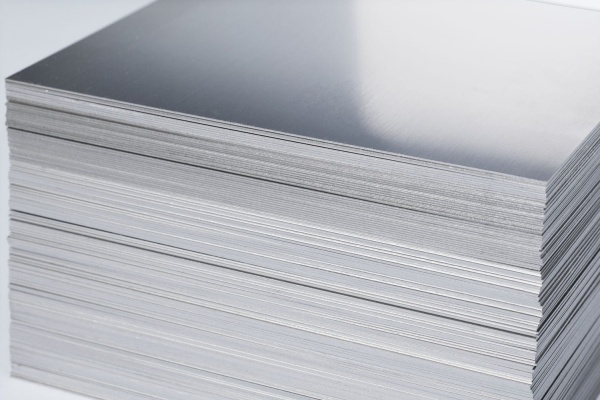
Aerospace and defense teams are leaning into thin tungsten sheets for thermal protection systems, re-entry vehicle components, and high-performance engine parts that see severe temperatures and reactive environments. The high melting point and strong creep resistance help maintain structure when conditions peak. In defense, density and hardness make tungsten useful in kinetic energy penetrators and specialized armor that demand ballistic performance. For spacecraft and sensitive military electronics, tungsten adds radiation hardening to protect against cosmic and nuclear radiation. The ability to form thin, complex shapes enables lightweight builds without giving up durability.
Start with thickness, since it dictates strength, thermal behavior, and radiation shielding. Thinner sheets save weight and add flexibility, but there is a limit before stiffness or shielding falls short. Next, match width and length to the part geometry to limit yield loss and downstream machining. Flatness and surface finish are non-negotiable for precision uses like sputtering targets or electronic components, where surface defects show up in performance. Define dimensional tolerances precisely so your parts mate and assemble correctly. Finally, factor in the operating environment, including maximum temperature and chemical exposure, which may drive surface treatments or protective handling.
Grade selection changes both behavior and budget. Pure tungsten at 99.95% or higher maximizes melting point, density, and electrical conductivity, which suits high-temperature and electronic applications, although it can be brittle at room temperature and hard to machine. Alloys bring targeted improvements. Tungsten-rhenium improves ductility and creep resistance at high temperatures, making it a fit for aerospace parts and thermocouples. Tungsten-lanthanum improves machinability and lowers recrystallization temperature, a plus in vacuum furnace components. Alloy additions add cost and can shift other properties, so we always run a trade-off review before locking in the grade.
| Grade | Purity (min) | Key Properties Enhanced | Typical Applications | Cost Impact |
|---|---|---|---|---|
| Pure Tungsten | 99.95% | High melting point, density, electrical conductivity | Heating elements, radiation shields, sputtering targets | Moderate to High |
| Tungsten-Rhenium | 95% W, 5% Re | Improved ductility, creep resistance, high-temp strength | Aerospace components, thermocouples | High |
| Tungsten-Lanthanum | 99.5% W, 0.5-2% La₂O₃ | Better machinability, lower recrystallization temperature | Vacuum furnace parts, electrodes | Moderate |
| Tungsten-Copper | Varies | High thermal/electrical conductivity, arc resistance | Electrical contacts, heat sinks | Varies (depends on W-Cu ratio) |
Look for ISO 9001 to confirm a functioning quality management system. For the material itself, ASTM B760 for unalloyed tungsten flat-rolled products sets the bar for composition, mechanical properties, and dimensional tolerances. Certain sectors add their own requirements, such as AS9100 for aerospace or ISO 13485 for medical devices. Suppliers should issue Material Test Reports (MTRs) or Certificates of Conformance (CoCs) that list chemical analysis, mechanical testing, and dimensional inspections for the specific lot. Full traceability from powder to finished sheet is a must for quality assurance and regulatory compliance. I insist on that paper trail before any release to production.
Hubei Fotma Machinery Co., Ltd. brings more than 30 years of technical accumulation in tungsten and molybdenum products, which shows up in process control and consistent output. Our team manages purity, grain structure, and mechanical properties with precision, backed by modern production equipment and advanced testing. That combination produces thin tungsten sheets that hit spec and stay stable in use, whether the job is high heat, electronics, or radiation shielding. From initial material selection through delivery, we support customers with the data and process discipline needed for high-stakes applications.
Fotma offers a broad range of complementary materials to build complete solutions. We specialize in tungsten-molybdenum products, including Pure Molybdenum Plate and tungsten-copper alloys. Our lineup includes Molybdenum-Copper (MoCu) Alloy and CMC Copper-Molybdenum-Copper Composite for demanding thermal management in electronics. We also supply High-Density Tungsten Alloy where maximum density and radiation shielding are required. For cutting and tooling, we provide Carbide Moving Knife Blade (Tungsten Carbide Knife) and other cemented carbide parts. Rounding things out, we carry titanium and nickel alloys for lightweight, corrosion-resistant, or high-strength needs. This mix lets us support multi-material programs under one roof.
Selecting the optimal thin tungsten sheet for your application demands a thorough understanding of material properties, manufacturing capabilities, and quality assurance. At Hubei Fotma Machinery Co., Ltd., we are dedicated to providing superior tungsten and molybdenum products, backed by decades of research and production expertise. Our team is ready to assist you in navigating your material requirements and offering customized solutions. We ensure that our products meet the highest industry standards, delivering performance and reliability. Reach out to us today to discuss your specific needs and discover how our advanced materials can enhance your projects.
You can contact us at +86 13995656368 or +86 13907199894, or email us at bunny@fotma.com or export@fotma.com.
The thinnest commercially available tungsten sheets can be as fine as 0.025 mm (0.001 inches). Achieving such thinness requires specialized rolling and annealing processes. These ultra-thin sheets are important for applications where space and weight are highly constrained, such as in microelectronics, medical devices, and precision instrumentation.
Thin tungsten sheets are difficult to form or machine at room temperature due to inherent brittleness. They often require heating above 500°C to improve ductility for forming operations like bending or deep drawing. Machining usually relies on EDM (Electrical Discharge Machining) or laser cutting.
Tungsten offers several key advantages over other refractory metals. Its unmatched melting point sustains performance at extreme temperatures. Its high density delivers superior radiation shielding and mass. Tungsten also maintains excellent mechanical strength and creep resistance at elevated temperatures, outperforming many other refractory metals in those areas.
Thin tungsten sheets tend to be more expensive than common engineering materials like steel or aluminum due to raw material cost, refining complexity, and specialized manufacturing. For critical applications that live in harsh conditions, the performance payoff often justifies the higher upfront spend.
Lead times depend on complexity, quantity, and current loading. Standard sizes and grades often run 4-8 weeks. Highly customized dimensions, specific alloys, or intricate processing requirements can extend lead times to 10-16 weeks or more.