
Threaded titanium tubes have earned our respect the hard way, on test stands and in the field, where weight needs trimming but performance cannot blink. Their mix of strength, corrosion resistance, and low mass solves problems across aerospace, chemical processing, marine, medical, energy, and automotive work. Drawing on decades in non-ferrous metals, especially titanium, we break down what makes these tubes tick, how the threads are made right, where they thrive, and why they so often end up as the smart choice in high-performance systems.
Titanium and its alloys bring a set of traits that stand apart from typical engineering materials, and threading those tubes multiplies the utility. The headline benefits remain the same every time we spec them in: a high strength-to-weight ratio, excellent corrosion resistance, and real biocompatibility. That combination makes them a natural fit where uptime, reliability, and service life matter.
Titanium alloys fall into alpha, alpha-beta, and beta families, each with its own mechanical profile. Ti-6Al-4V, the workhorse alpha-beta alloy, blends high strength with useful ductility and weldability. Pure titanium grades, such as Grade 2 and Grade 5, exhibit varying levels of strength and formability. The best alloy choice always comes back to operating conditions, including temperature range, pressure, and chemical media.
We often specify titanium alloys for their:
1. High Strength-to-Weight Ratio: Titanium is approximately 40% lighter than steel but offers comparable or superior strength. This weight reduction is vital in aerospace and automotive industries.
2. Exceptional Corrosion Resistance: Titanium forms a passive oxide layer that provides excellent resistance to a wide range of corrosive media. This includes seawater, chlorine, and various acids and alkalis.
3. Biocompatibility: Certain titanium grades are non-toxic and non-allergenic, making them suitable for medical implants and pharmaceutical equipment.
4. Excellent Fatigue Resistance: Titanium alloys maintain their structural integrity under cyclic loading, extending component lifespan in dynamic environments.
5. High-Temperature Performance: Many titanium alloys retain significant strength at elevated temperatures, which is vital for aerospace engine components.
Consider the specific grade of titanium for your application. For example, Grade 2 is commercially pure and offers good corrosion resistance and ductility, while Grade 5 (Ti-6Al-4V) provides higher strength.
Adding threads to titanium tubes turns a strong material into a modular, service-friendly component. Done right, threads enable tight, leak-resistant joints and controlled adjustability, which makes maintenance and design changes far easier. The catch is that thread integrity depends on both the alloy and the process, so execution matters.
Key benefits of threaded titanium tubes include:
* Secure Fastening: Threads provide a robust mechanical joint that resists loosening under vibration or thermal cycling.
* Leak-Proof Connections: When properly sealed, threaded connections prevent fluid or gas leakage, essential in high-pressure systems.
* Ease of Assembly and Disassembly: Threaded components simplify installation, replacement, and maintenance procedures, reducing downtime.
* Adjustability: Threads allow for precise positioning and alignment of components, offering flexibility in system design.
The design of the thread (e.g., NPT, BSP, metric) must align with industry standards and application requirements. Proper thread engagement ensures optimal load distribution and prevents premature failure.
Threaded titanium tubes demand discipline on the shop floor. Titanium’s high strength and low thermal conductivity are a tough pairing for tools and setups, so you need careful control of parameters and the right tooling to protect surface integrity and thread form. We use dedicated processes and tight controls to lock in accuracy and durability.
Several methods exist for creating threads on titanium tubes, each with its own advantages and limitations. The choice of method depends on factors like thread type, tube dimensions, required precision, and production volume.
TABLE 1: Common Thread Types for Industrial Piping | Thread Type | Standard | Seal Type | Application |
|—|—|—|—|
| NPT | ANSI/ASME B1.20.1 | Tapered | General purpose, high pressure |
| BSPP | ISO 228-1 | Parallel, requires O-ring/washer | Low pressure, fluid power |
| BSPT | ISO 7-1 | Tapered | Sealing with thread interference |
| Metric | ISO 261, ISO 68-1 | Parallel or tapered | General purpose, machine components |
Titanium’s low modulus of elasticity, high chemical reactivity, and low thermal conductivity present significant machining challenges. These factors can lead to tool wear, chip welding, and surface integrity issues.
Solutions include:
1. Optimized Tooling: We utilize specialized carbide tools with specific geometries and coatings to minimize wear and heat generation.
2. Controlled Cutting Parameters: Precise control over cutting speed, feed rate, and depth of cut is required to prevent work hardening and ensure thread quality.
3. Effective Cooling and Lubrication: High-pressure coolant systems help dissipate heat and flush chips, preventing thermal damage and improving surface finish.
4. Rigid Machine Setup: High rigidity in machine tools and workholding fixtures minimizes vibration, which can compromise thread accuracy.
For more information on titanium alloys, you can read about Is Titanium Alloy Stronger Than Titanium.
After threading, the cleanup and finishing steps pay dividends in service. Deburring removes sharp edges and burrs that can concentrate stress or compromise sealing. Cleaning strips residual fluids and contaminants. Surface finishing, such as passivation or anodizing, further improves corrosion resistance and wear properties.
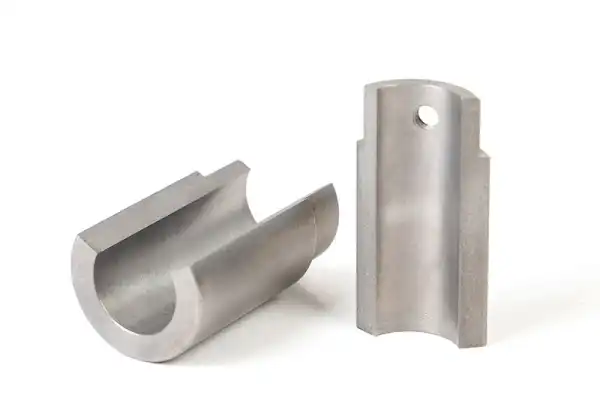
From our vantage point, these tubes show up wherever equipment is pushed hard. Their corrosion resistance, fatigue behavior, and low density make them easy to justify when failure is not an option. That is why we see them specified across a wide range of critical operations.
In aerospace, every gram saved adds up to real fuel and payload advantages. Threaded titanium tubes are widely used in aircraft hydraulic systems, fuel lines, and structural components. Their high strength-to-weight ratio and fatigue resistance support flight safety and long service intervals. In defense programs, you will find them in missile systems, naval vessels, and armored vehicles, where harsh conditions and reliability are baseline expectations.
Titanium’s corrosion resistance shines in aggressive chemical and saltwater environments. Threaded titanium tubes see duty in heat exchangers, piping systems, and pressure vessels in chemical plants. On the marine side, they serve in offshore platforms, subsea hardware, and shipbuilding, holding up against seawater and biofouling.
In medical settings, the material itself needs to be as quiet as the instrument, and titanium excels there. Threaded titanium tubes are used in surgical instruments, dental implants, and a range of medical devices. Their biocompatibility helps avoid adverse reactions, and their strength provides dependable support. That combination works well for long-term implantable systems.
Oil and gas, and power generation, push fluids at high pressure and temperature, and threaded titanium tubes do the job while resisting erosion and corrosion. That reliability stretches maintenance windows. In automotive, especially racing and high-performance builds, titanium trims weight while preserving stiffness and durability in exhaust systems, suspension components, and engine parts.
We also supply titanium material suppliers for various industrial needs.
Purchasing threaded titanium tubes is no place to roll the dice. Given where these parts end up, material integrity and precision are non-negotiable. We lean on rigorous controls and proven partners to make sure performance matches the spec sheet in the real world.
Choosing the right alloy is the starting line. We review the material specification in detail to match environmental and mechanical demands. Full traceability from ingot to finished tube is required, including chemical composition, mechanical property data, and heat treatment records.
Compliance with international manufacturing standards matters. We ensure our threaded titanium tubes align with the relevant ASTM, ISO, and other sector-specific requirements. These standards cover chemistry, dimensional tolerances, mechanical testing, and surface finish. Certifications from accredited bodies provide independent confirmation of quality and process control.
TABLE 2: Key Quality Standards for Threaded Titanium Tubes
| Standard Body | Standard Number | Description | Applicable Grades |
|---|---|---|---|
| ASTM | B338 | Seamless and Welded Titanium and Titanium Alloy Tubes for Condensers and Heat Exchangers | Grade 1, 2, 3, 7, 9, 11, 12, 16, 17, 18, 26 |
| ASTM | B861 | Titanium and Titanium Alloy Seamless Pipe and Tube | Grade 1, 2, 3, 7, 9, 11, 12, 16, 17, 18, 26 |
| ISO | 5832-2 | Implants for surgery — Metallic materials — Part 2: Unalloyed titanium | Pure Titanium (Medical Grade) |
| ISO | 5832-3 | Implants for surgery — Metallic materials — Part 3: Wrought titanium 6-aluminium 4-vanadium alloy | Ti-6Al-4V (Medical Grade) |
| AMS | 4944 | Titanium Alloy, Seamless Tubing, 3.0Al – 2.5V, Annealed | Ti-3Al-2.5V (Aerospace) |
Comprehensive inspection and testing protocols verify the quality and integrity of each threaded titanium tube. These protocols include:
1. Dimensional Inspection: Verifying outer diameter, wall thickness, length, and thread dimensions using precision instruments.
2. Non-Destructive Testing (NDT): Methods like ultrasonic testing, eddy current testing, and radiographic inspection detect internal flaws or surface imperfections without damaging the material.
3. Mechanical Testing: Tensile strength, yield strength, elongation, and hardness tests confirm the material’s mechanical properties meet specifications.
4. Corrosion Testing: For critical applications, specialized corrosion tests simulate aggressive environments to confirm long-term performance.
We encourage you to review our insights on Beyond Price The Ultimate Guide To Choosing Your Titanium Supplier Parts Manufacturer for more details.
Choosing a supplier with a proven track record in manufacturing and supplying high-quality titanium products is essential. We, at FOTMA, have over 30 years of experience in non-ferrous metals, including titanium alloys. Our expertise ensures that we understand the nuances of titanium processing and can deliver products that meet the most stringent requirements. We maintain modern production equipment and advanced testing methods, providing complete solutions for precision mechanical processing and manufacturing.
At FOTMA, we leverage our extensive experience and advanced manufacturing capabilities to provide high-quality threaded titanium tubes. Our commitment to precision, quality, and customer satisfaction ensures that your specific application requirements are met with superior products. We offer customized solutions and technical support to help you select the ideal titanium alloy and threading specifications.
Contact us today to discuss your project requirements or to learn more about our titanium products. You can reach us at +86 13995656368, +86 13907199894, or via email at bunny@fotma.com and export@fotma.com.
Threaded titanium tubes offer an unparalleled combination of properties. They provide an excellent strength-to-weight ratio, which is vital for applications where weight reduction is critical. Their superior corrosion resistance extends component lifespan in harsh chemical and marine environments. Additionally, titanium’s biocompatibility makes these tubes ideal for medical and pharmaceutical applications, ensuring safety and inertness.
Threads on titanium tubes are formed through several precision machining processes. These include cutting, rolling, and grinding. Cutting removes material with specialized tools, while rolling forms threads by deforming the material, often resulting in stronger threads. Grinding supports high-precision requirements. Each method requires specific tooling and tightly controlled parameters due to titanium’s unique material properties.
Threaded titanium tubes are widely used in industries demanding high performance and reliability. These include aerospace and defense for lightweight, strong components, and chemical processing and marine industries due to titanium’s exceptional corrosion resistance. The medical sector employs them for biocompatible implants and instruments. Additionally, the energy and high-performance automotive sectors also benefit from their robust properties.
Yes, threaded titanium tubes can be highly customized to meet diverse application needs. Customization options include specific titanium alloy grades (e.g., Grade 2, Grade 5), various thread types (e.g., NPT, BSP, metric), and precise dimensions (outer diameter, wall thickness, length). Surface treatments and post-processing can also be tailored to enhance properties like wear resistance or surface finish.
When sourcing threaded titanium tubes, adherence to recognized quality standards is paramount. Key standards include ASTM B338 and B861 for general industrial applications, and ISO 5832-2 and 5832-3 for medical implants. Aerospace applications often require AMS specifications. These standards ensure material composition, mechanical properties, dimensional accuracy, and overall product reliability.