Titanium Alloy Materials: Properties, Applications, and Sourcing
As a non-ferrous metal materials engineer who has spent more than 30 years in mills, labs, and on customer floors, I have watched titanium alloys earn their place the hard way, part by part and test by test. They pair low density with real strength, shrug off harsh environments, and behave well in the body, which is why engineers, designers, and procurement specialists keep coming back to them for high-stakes work. Here is how I think about their properties, where they excel, and what to lock down when sourcing.
Understanding the Unique Characteristics of Titanium Alloy Materials
Titanium alloys bring a rare mix of attributes that make them indispensable in high-performance engineering. Those traits come from titanium’s base behavior and the deliberate use of alloying elements. Let’s anchor the fundamentals that define these materials.
1. What Defines Titanium Alloys and Their Composition?
Titanium alloys are metallic materials built on a titanium base with additions such as aluminum, vanadium, molybdenum, and tin to tune mechanical and chemical response. These additions preserve titanium’s low density and lift strength, ductility, and high-temperature performance. Composition drives microstructure, and microstructure sets the mechanical behavior. A classic example is Ti-6Al-4V, which contains 6% aluminum and 4% vanadium and delivers a well-balanced mix of strength, ductility, and corrosion resistance.
2. Exploring the Superior Strength-to-Weight Ratio of Titanium Alloys
The strength-to-weight ratio is the headline. Relative to their low density, titanium alloys carry high tensile strength and fracture toughness. Titanium is about 40% lighter than steel while offering comparable, sometimes higher, strength. In weight-sensitive sectors like aerospace and automotive, that translates into better fuel efficiency and performance. The net effect is thinner, lighter components that still meet structural requirements.
3. How Titanium Alloys Achieve Exceptional Corrosion Resistance
Titanium alloys resist corrosion because they quickly form a stable, protective oxide layer in oxygen-containing environments. This adherent film, primarily titanium dioxide (TiO2), blocks further oxidation or chemical attack. It holds up in seawater, chlorine solutions, and many acids, which is why these alloys are trusted in marine, chemical processing, and medical settings where material loss can be unforgiving.
4. The Biocompatibility of Titanium Alloys for Medical Applications
Titanium alloys are biocompatible. They are non-toxic and do not trigger adverse reactions in the body, largely due to the inert oxide layer that limits metallic ion release into tissue. That is why they are standard for implants, surgical instruments, and prosthetics. Their ability to integrate with bone, or osseointegration, supports stable, long-term implantation.
Key Grades and Manufacturing Processes for Titanium Alloys
Composition is only part of the story. Grade selection and processing routes define the delivered properties. Different grades fit distinct needs, and manufacturing choices fine-tune strength, ductility, and integrity.
1. Differentiating Alpha, Alpha-Beta, and Beta Titanium Alloy Grades
Titanium alloys fall into three broad types based on microstructure, which is controlled by alloying and heat treatment:
Alpha (α) Alloys: These contain alpha-stabilizing elements such as aluminum and oxygen. They are non-heat-treatable, weld well, offer excellent corrosion resistance, and keep strength at elevated temperature, although their overall strength is lower than other families.
Alpha-Beta (α+β) Alloys: The most widely used and versatile class, with both alpha and beta stabilizers, for example aluminum and vanadium. They are heat-treatable, so strength and ductility can be tailored. Ti-6Al-4V is the flagship, known for balanced properties.
Beta (β) Alloys: These include higher levels of beta stabilizers like vanadium and molybdenum. They respond strongly to heat treatment, reach very high strength, and form well, though their high-temperature stability and corrosion resistance typically trail alpha alloys.
Understanding these distinctions is crucial for selecting the appropriate titanium material suppliers for specific engineering challenges.
2. Common Manufacturing Techniques for Titanium Alloy Components
Processing titanium alloys takes care and the right equipment, given their reactivity and strength at high temperature.
Melting and Casting: Melting is performed in vacuum arc remelting (VAR) or electron beam (EB) furnaces to avoid contamination, then cast into ingots for downstream work.
Forging: Hot forging refines grain, lifts mechanical properties, and enables complex geometries. Tight control of forging parameters helps prevent defects.
Rolling: Ingots are rolled into sheet, plate, and bar. Cold rolling can improve surface finish and add strength.
Machining: Low thermal conductivity and chemical reactivity make machining tricky. Use appropriate tooling, cutting fluids, and parameters to manage heat and wear.
Welding: Welding demands inert gas shielding to prevent pickup from air, which can embrittle the joint. Gas Tungsten Arc Welding (GTAW) is a common choice.
Additive Manufacturing: Electron Beam Melting and Laser Powder Bed Fusion are increasingly used for intricate, lightweight parts with minimal waste.
3. The Role of Heat Treatment in Optimizing Titanium Alloy Properties
Heat treatment adjusts microstructure to hit target properties through controlled heating and cooling.
Annealing: Lowers hardness, raises ductility, and relieves internal stress, which improves workability.
Solution Treatment and Aging (STA): For alpha-beta and beta alloys, solution treatment heats to a high temperature before rapid cooling to hold a supersaturated solid solution. Aging at an intermediate temperature precipitates fine secondary phases, lifting strength and hardness.
Stress Relieving: A lower-temperature treatment that reduces residual stresses from manufacturing, which helps limit distortion and improves fatigue life.
Choosing the right thermal path sets the balance of strength, ductility, and toughness for the job.
Diverse Applications Leveraging Titanium Alloy Performance
Because titanium alloys combine strength, corrosion resistance, and biocompatibility, they are used wherever the risk is high and the margin for error is low.
1. How Titanium Alloys Revolutionize Aerospace and Defense Structures
Aerospace and defense have long relied on titanium alloys. The high strength-to-weight ratio cuts airframe weight, which boosts fuel economy and payload.
Airframe Structures: Landing gear, wing spars, and fuselage components.
Engine Components: Compressor blades, discs, and casings that see high temperature and stress.
Fasteners: Lightweight, high-strength bolts and rivets.
Missile and Rocket Casings: Structural shells that hold up under extreme conditions.
The use of Titanium Alloy Products in these applications ensures both performance and safety.
2. Advancements in Medical Implants and Instruments with Titanium Alloys
Biocompatibility and corrosion resistance have made titanium alloys standard in medicine.
Orthopedic Implants: Hip and knee replacements, spinal fusion devices, and bone plates.
Dental Implants: Root-form implants and prosthetic frameworks.
Surgical Instruments: Durable, corrosion-resistant, and easy to handle.
Cardiovascular Devices: Pacemaker cases and artificial heart valves.
Long-term stability and inertness in vivo are the main reasons they are trusted here.
3. The Use of Titanium Alloys in Chemical Processing Equipment
In chemical processing, titanium alloys resist aggressive media and extend equipment life.
Heat Exchangers: Service with chlorine, nitric acid, and organic acids.
Pumps and Valves: Reliable operation in harsh chemical streams.
Storage Tanks and Reactors: Containment for strongly corrosive substances.
Piping Systems: Transport of aggressive chemicals without degradation.
Performance in these settings exceeds that of many other metals.
4. Integrating Titanium Alloys in Marine and Automotive Components
Marine and automotive programs benefit from both corrosion resistance and high specific strength.
Marine Components: Submersible housings, propeller shafts, and heat exchangers for offshore platforms.
Automotive Parts: High-performance exhaust systems, connecting rods, and valve springs for racing and luxury platforms where weight and heat resistance matter.
Sports Equipment: Golf club heads, bicycle frames, and tennis rackets that take advantage of low weight with high strength.
The range of use cases shows how adaptable these alloys can be.
Selecting the Right Titanium Alloy for Your Project Needs
Getting the grade and process right affects performance, cost, and schedule. A structured selection process pays for itself.
1. Evaluating Mechanical Properties for Specific Application Requirements
Match the mechanical profile to what the part must do.
2. Quality Control and Certification Standards for Titanium Materials
Control plans and documented compliance protect performance.
Material Specifications: Verify conformance to ASTM, AMS, or other relevant specifications for chemistry and properties.
Testing and Inspection: Look for tensile, hardness, and impact testing, along with non-destructive testing such as ultrasonic inspection.
Certificates of Conformance (CoC): Review CoCs to confirm measured properties and specification compliance.
Supplier Audits: Audit facilities to confirm the quality system is implemented consistently.
These measures guarantee the reliability and performance of titanium material suppliers in critical applications.
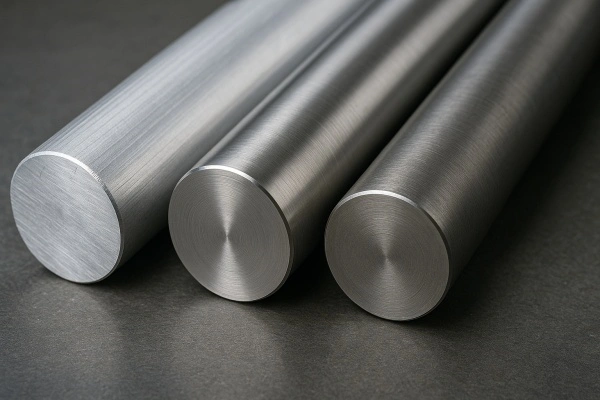
Gr2, Gr5 Titanium Rods
3. The Importance of Technical Support and Customization Options
Added engineering support from a supplier reduces risk and time to result.
Engineering Consultation: Access to experienced engineers helps optimize grade, design, and process.
Customization: Custom sizes, shapes, or compositions can be decisive for unique requirements.
Problem-Solving: Responsive support helps resolve issues during development, manufacturing, or service.
Research and Development: Suppliers investing in R&D can offer new alloys and process improvements.
Unlock the Potential of Titanium Alloys with Fotma
At Hubei Fotma Machinery Co., Ltd., we provide high-quality titanium alloy materials and precision manufacturing solutions. With over 30 years of technical accumulation in advanced non-ferrous metals, our team is ready to help you pinpoint the right titanium alloy for demanding applications. If you want to sanity-check a grade choice or talk through processing constraints, reach out and we will share what has worked for programs like yours.
1. What are the primary advantages of using titanium alloys over other metals?
Titanium alloys combine low density with high strength, which makes them ideal for lightweighting in aerospace and automotive programs. They also resist corrosion in harsh environments such as seawater and chemical processing streams. Their biocompatibility supports safe, long-term implantation in the human body, a key requirement for medical devices.
2. Are there different types of titanium alloys, and how do they differ?
Yes. Titanium alloys are grouped into alpha (α), alpha-beta (α+β), and beta (β) types. Alpha alloys offer good weldability and hold strength at higher temperatures. Alpha-beta alloys, such as Ti-6Al-4V, are most common and can be heat treated to balance strength and ductility. Beta alloys deliver very high strength and good formability with extensive heat treatment.
3. What industries commonly use titanium alloys?
They are widely used in aerospace and defense for airframes and engines because of their strength-to-weight ratio. The medical sector relies on them for implants and surgical tools due to biocompatibility. Chemical processing uses them for equipment in aggressive media. They also see service in marine, automotive, and sports equipment.
4. How does the cost of titanium alloys compare to other high-performance materials?
Titanium alloys cost more than stainless steel or aluminum. The premium reflects extraction, refining, and specialized manufacturing. In many critical applications, the longer service life, higher performance, and reduced maintenance can offset the higher upfront expense when viewed over the lifecycle.
5. Can titanium alloys be recycled, and what is their environmental impact?
Yes. Titanium alloys are fully recyclable. Scrap can be collected, sorted, cleaned, and remelted in vacuum furnaces to produce new ingots, which reduces demand for virgin ore and limits waste. Environmentally, titanium is considered sustainable due to its abundance, recyclability, and the inert oxide layer that prevents harmful leaching.