
As an after-sales engineer, I’m constantly fielding questions about advanced materials—and titanium alloys come up more than anything else. A well-chosen grade has saved more than one client from unnecessary weight, premature wear, and long downtime. Getting the nuances right matters: understanding composition, microstructure, and operating environment directly drives performance and service life. Here’s how I typically break it down for customers—what sets titanium apart, how its properties hold up in real-world conditions, and why it’s become essential across so many critical industries.
Titanium alloys live in that rare sweet spot engineers are always chasing: high strength, low mass, and outstanding corrosion resistance. In demanding environments, they frequently outperform traditional metals, and in certain use cases, they can deliver advantages steel simply can’t match.
What consistently impresses me is the strength-to-weight ratio—far higher than steel—which lets you cut mass without sacrificing structural integrity. That’s a game-changer anywhere weight is the enemy. Add in their innate corrosion resistance, especially against saltwater and aggressive chemicals, thanks to a naturally forming passive oxide layer that shields the surface. On top of that, titanium alloys are highly biocompatible and don’t trigger adverse reactions in contact with tissue, which is why they’re trusted for medical and dental implants.
Mechanically, titanium alloys deliver high tensile strength, excellent fatigue resistance, and solid toughness—exactly what you want under cyclic loads and impact. Chemically, they’re resilient against oxidation and chloride-induced corrosion, so they hold their form and function in harsh settings like marine and chemical processing. Their relatively low coefficient of thermal expansion also helps parts stay dimensionally stable as temperatures shift.
Titanium alloys are broadly grouped into alpha, alpha-beta, and beta families. Their behavior stems from microstructure and alloying elements, which is why each category brings different strengths to the table.
| Alloy Type | Primary Alloying Elements | Key Characteristics | Typical Applications |
|---|---|---|---|
| Alpha | Aluminum, Tin, Zirconium | Good weldability, high-temperature strength, excellent corrosion resistance. | Cryogenic vessels, airframe components, chemical processing equipment. |
| Alpha-Beta | Aluminum, Vanadium | High strength, good ductility, excellent fatigue properties, heat treatable. | Aerospace structures, medical implants, marine components. |
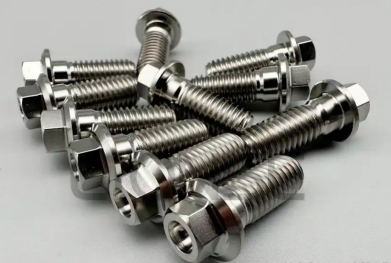
| Beta | Vanadium, Molybdenum, Chromium | Very high strength, good formability, deep hardenability. | Landing gear, fasteners, springs. |
The most common grade, Ti-6Al-4V (an alpha-beta alloy), showcases titanium’s versatility. Aluminum boosts strength while vanadium supports ductility, giving a balanced property set that works across a wide range of applications. If you’re interested in specific applications, check What Is The Most Commonly Used Titanium Alloy.
When the environment is unforgiving and reliability is non-negotiable, titanium alloys earn their keep. Their property profile translates into longer service life, fewer failures, and better performance margins—reasons we lean on them to push technical boundaries.
Aerospace leverages titanium alloys for airframe structures, engine parts, and landing gear because the strength-to-weight advantage lifts fuel efficiency and payload capacity. Their fatigue resistance enhances safety and durability under countless stress cycles. In defense, you’ll find titanium in military aircraft, missiles, and armored systems where superior protection, high performance, and resilience to extreme temperatures and corrosive conditions are critical.
For implants and devices, biocompatibility and corrosion resistance are non-negotiable—and titanium alloys deliver both. They’re used in orthopedic implants (hips, knees), dental implants, surgical tools, and prosthetics. Titanium’s non-toxic nature and ability to osseointegrate—bonding effectively with bone—help patients get durable, long-lasting implants with minimal adverse reactions. For more information on titanium in medical applications, you might find What Is A Titanium Rod Used For insightful.
In chemical processing and marine settings, corrosive media are the norm. Titanium alloys resist chlorides, acids, and other aggressive chemicals, making them well-suited for heat exchangers, tanks, piping, and valves. Offshore platforms, submarine hardware, and desalination plants also benefit, as titanium holds up in saltwater where other metals would deteriorate quickly—reducing maintenance and improving safety over the long haul.
At FOTMA, we pair practical manufacturing know-how with deep materials expertise to deliver titanium alloy solutions that meet exacting standards. From standard grades to custom builds, our focus is on precision, reliability, and measurable results for our clients.
Quality is baked into our process from start to finish. Our facilities are ISO-9000-1:2008 certified, and we rely on modern production equipment and advanced testing to validate every product. With over 30 years of technical accumulation, our core team’s material research competency keeps us on the leading edge of alloy technology, enabling consistent performance and dependable supply.
Every application has its own constraints and targets, so we build around those needs. We offer tailored Titanium Alloy Products and collaborate closely with clients—whether it’s a specialized aerospace component or a custom medical implant—to optimize both performance and cost. Our supply spans forms such as Titanium Rod and Titanium Sheet Titanium Alloy Plates, ensuring you get the right material and geometry for the job. For clients seeking specialized titanium parts, consider Beyond Price The Ultimate Guide To Choosing Your Titanium Supplier Parts Manufacturer.
When you work with FOTMA, you’re tapping into deep material knowledge and a proven delivery record. We provide end-to-end support, from mechanical processing and manufacturing to precision instrument accessories. Our competitiveness at home and abroad rests on consistent quality and customer-focused service—so your critical parts perform exactly as expected.
If you’d like expert input on titanium alloys or want to discuss a specific requirement, we’re here to help. Reach out to us at bunny@fotma.com or export@fotma.com, or call us at +86 13995656368 or +86 13907199894 for timely support and practical solutions.
Alex Chen focuses on helping clients get timely solutions and dependable performance from their products. Motivated by problem-solving and continuous improvement, Alex shares practical insights so customers can extract maximum value from every purchase.
Titanium alloys provide a much higher strength-to-weight ratio and stronger corrosion resistance than steel. While steel is denser and often more economical, titanium’s lightweight, high-strength, and corrosion-resistant profile makes it indispensable in harsh environments where performance per kilogram matters.
Yes. Many titanium alloys retain strength at elevated temperatures. Alpha and near-alpha alloys, in particular, are well-suited to high-temperature roles—think jet engine components—thanks to excellent creep resistance and thermal stability.
FOTMA operates as an ISO-9000-1:2008 certified enterprise. We use modern production equipment and advanced testing to uphold strict quality control, and our team brings over 30 years of materials research experience to ensure reliable, high-performing titanium alloy products.
Absolutely. FOTMA specializes in tailored titanium alloy solutions. We collaborate with clients to define requirements and then customize compositions, product forms, and finishes to optimize performance for each unique industrial challenge.
Aerospace and defense rely on titanium for lightweight strength. The medical sector values its biocompatibility for implants. Chemical processing and marine industries choose titanium for outstanding corrosion resistance. You’ll also see it boosting performance in automotive and sports equipment.