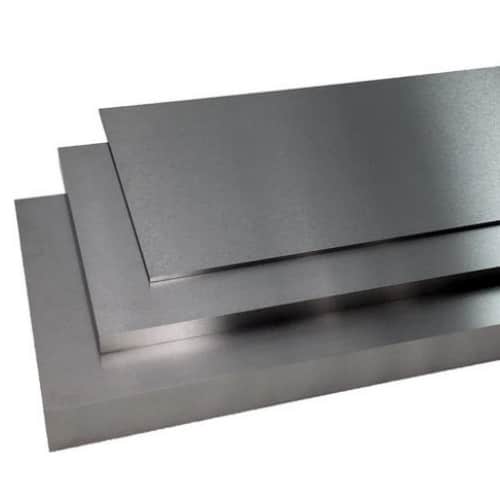
Top Pure Nickel Sheet Suppliers for Industrial Applications
You know, trying to find the right stuff for industrial projects, especially something as specific as pure nickel sheets, can feel like a real treasure hunt. It’s not just about finding any nickel; it’s about getting the right nickel, the stuff that’s going to hold up when everything else fails. We’re talking about materials that absolutely have to stand strong against corrosion, conduct electricity like a champ, and maybe even play nice with magnetic fields. And let’s be honest, navigating the maze of suppliers and specs? That’s a job in itself. My aim here is to cut through some of that noise, to give you the lowdown so you, whether you’re a procurement pro, an engineer, or just someone who needs to get this right, can make a truly smart choice.
Understanding the Critical Role of Pure Nickel Sheets in Industry
It’s pretty wild when you think about it: these pure nickel sheets are basically the unsung heroes behind so many advanced industrial operations. They’ve got this almost magical combination of properties that just makes them indispensable, especially when other materials just can’t cut it. I’ve seen it time and again – the demand for high-purity nickel just keeps climbing in all the places that really matter.
1. What are the unique properties and benefits of pure nickel sheets?
When we talk about pure nickel, we’re usually looking at something like 99.6% to 99.99% nickel content. And let me tell you, that purity level gives it a whole host of physical and chemical superpowers that make it incredibly valuable for those tough industrial environments.
Exceptional Corrosion Resistance: This is a big one. Nickel basically creates its own little shield, a passive oxide layer, which makes it incredibly tough against all sorts of nasty stuff – alkalis, acids, even organic compounds. If you’re in chemical processing or dealing with marine environments, this property is a total game-changer.
High Electrical and Thermal Conductivity: It’s a fantastic conductor, both for electricity and heat. I mean, for electrical conductivity, it’s only really outdone by copper among common industrial metals. That’s huge for electrical components and anything that needs efficient heat transfer.
Good Magnetic Properties: Here’s a cool fact: nickel is ferromagnetic at room temperature. That means it’s perfect for things like magnetic shielding or when you need a very specific magnetic response.
Ductility and Malleability: This stuff is surprisingly flexible. You can bend it, stamp it, deep draw it into all sorts of complex shapes without it cracking or breaking. That workability is a massive plus when you’re trying to create intricate parts.
High Temperature Strength: Nickel doesn’t just roll over when things get hot. It keeps a lot of its strength and stability even at elevated temperatures, which makes it ideal for furnace components and other high-heat applications.
Biocompatibility: Now, this is interesting. Some grades of pure nickel are actually pretty friendly with biological systems. So, you might find it in certain medical or food processing gear, though you always have to be mindful of nickel allergies, of course.
Honestly, when you put all these attributes together, it’s clear why pure nickel sheets perform so reliably even under extreme conditions. They really do contribute to making critical industrial systems last longer and run more efficiently.
2. How do pure nickel sheets meet the demands of various industrial applications?
Pure nickel sheets are like the problem-solvers of the material world, tackling specific challenges across a whole bunch of industries. They really shine in environments where a material failure could spell disaster, whether it’s an operational nightmare or a safety hazard.
Chemical Processing: Walk into a chemical plant, and you’ll find pure nickel sheets everywhere – reaction vessels, pipes, heat exchangers. Their ability to stand up to strong alkalis, like caustic soda, is practically unmatched. They shrug off corrosive acids and organic chemicals, keeping everything running smoothly and extending the life of the equipment.
Electronics Industry: High electrical conductivity plus corrosion resistance? That’s a winning combo for battery components, electrical contacts, and lead frames. You’ll see it a lot in lithium-ion batteries and other cutting-edge energy storage systems.
Aerospace and Defense: When you’re dealing with high temperatures and specialized instruments, pure nickel steps up. Its thermal stability and resistance to oxidation at scorching temperatures are absolutely crucial for aerospace engineering.
Power Generation: Think nuclear reactors or fossil fuel power plants. These places need materials that can endure extreme conditions for ages, and pure nickel, with its corrosion resistance and high-temp performance, fits the bill perfectly.
Food Processing and Medical Equipment: For anything that needs to be super pure and contamination-free, pure nickel sheets sometimes get the call. It’s pretty inert and easy to clean, though, as I mentioned before, you always have to be careful about specific grades and potential allergies.
The sheer versatility of pure nickel sheets means engineers can design systems that are not only incredibly efficient but also unbelievably durable. I constantly see these materials being specified for projects where reliability isn’t just a nice-to-have, it’s everything.
Key Considerations When Choosing a Pure Nickel Sheet Supplier
Alright, let’s talk brass tacks. Picking the right supplier for pure nickel sheets isn’t just another item on the checklist; it’s a make-or-break decision. It directly impacts whether your product is top-notch, if your project stays on schedule, and ultimately, how much it all costs. I always tell people to really dig deep and evaluate suppliers based on a few critical points.
1. What quality certifications and manufacturing standards should suppliers meet?
Any supplier worth their salt will have solid quality standards and the certifications to prove it. These aren’t just fancy pieces of paper; they’re your guarantee that the pure nickel sheets you’re getting are consistent, pure, and will perform exactly as expected.
ISO 9001 Certification: This is the gold standard for quality management. If a supplier has it, it means they’re serious about consistent quality, with robust processes for everything from production to inspection and always striving to get better.
ASTM Standards: Make sure those pure nickel sheets conform to specific ASTM standards. ASTM B162, for example, lays out the requirements for nickel plate, sheet, and strip – covering chemical composition, mechanical properties, and how precisely they’re made.
Material Test Reports (MTRs): This is non-negotiable. A good supplier will give you comprehensive MTRs with every single shipment. These reports detail the chemical analysis, mechanical properties, and even heat treatment records. It’s how you trace everything back and confirm the material is exactly what you ordered.
Environmental and Safety Certifications: Things like ISO 14001 (for environmental management) and OHSAS 18001 (for health and safety) show that a supplier is operating responsibly. These are becoming more and more important for ethical sourcing and keeping your supply chain compliant.
Industry-Specific Approvals: Depending on what you’re using the nickel for, you might need extra approvals. Aerospace, for instance, might demand AS9100 certification, while medical applications could require FDA compliance.
Honestly, choosing a supplier with these credentials just takes a huge load off your mind when it comes to material quality and regulatory headaches.
2. How do material purity and traceability impact product performance?
When it comes to pure nickel sheets, purity and traceability are absolutely paramount. Even the tiniest impurity can completely throw off how the material performs.
Impact of Purity: We’re talking high purity here – 99.6% to 99.99%. That’s what keeps nickel’s natural properties intact. Let even a little impurity sneak in, and suddenly your corrosion resistance drops, electrical conductivity changes, or magnetic behavior gets weird. Iron impurities, for example, can mess with magnetic shielding. Carbon content? That’ll affect how well you can weld it and its mechanical strength.
Traceability: This means being able to follow the material’s journey from the very first bit of raw ore, through every single manufacturing step – melting, rolling, final inspection. Every batch needs a unique ID linked to detailed records. It’s about accountability, and if something goes wrong, you can quickly figure out where the problem started.
Consequences of Low Purity/Poor Traceability: Using impure nickel is just asking for trouble: premature component failure, skyrocketing maintenance costs, and even safety risks. And if you can’t trace it back, you’re completely in the dark about the source of defects, which makes fixing things and ensuring quality a nightmare.
My advice? Insist that suppliers provide verifiable documentation of purity and have rock-solid traceability systems. It’s the only way to be sure the material meets the exact specs your critical applications demand.
3. What customization options are available for specific project requirements?
Let’s face it, industrial applications rarely fit into a neat little box. You often need pure nickel sheets with very specific dimensions, finishes, or some unique processing. A supplier who can be flexible here is a true gem.
Dimensional Customization: This is about getting the thickness, width, and length just right. Suppliers should be able to cut, shear, or blank the material precisely to your needs. Precision cutting means less waste and faster fabrication for you.
Surface Finishes: Different jobs call for different looks and feels. You might need polished, matte, or even specialized coatings for better performance. The surface quality really does impact things like corrosion resistance, how it looks, and how well things stick to it.
Temper and Hardness: Pure nickel sheets come in various “tempers” – annealed (soft), half-hard, full-hard. The temper you choose affects how easily you can form the material and its final strength. Suppliers should be able to heat-treat materials to specific hardness levels.
Specialized Processing: Sometimes, a project needs something extra, like deep drawing, perforating, or etching. A good supplier can either do these in-house or has trusted partners who can.
Small Batch Orders and Prototyping: For R&D or those really niche projects, being able to order small batches is a lifesaver. And if a supplier offers prototyping services? Even better, because you can validate your designs before committing to a huge production run.
Choosing a supplier with extensive customization capabilities means your pure nickel sheets will be a perfect match for your project specifications, saving you from costly reworks and frustrating delays.
Hubei Fotma Machinery Co., Ltd. as a Leading Pure Nickel Sheet Supplier
Hubei Fotma Machinery Co., Ltd. – we’ve really made a name for ourselves as a go-to for high-quality non-ferrous metal materials, and yes, that includes pure nickel sheets. Our long history and ISO certification aren’t just for show; they really highlight our dedication to doing things right.
1. How does Fotma’s expertise ensure high-quality pure nickel sheet production?
Our expertise in non-ferrous metals isn’t something we just stumbled upon. It’s built on over 30 years of technical know-how from our core team. That deep understanding is truly the backbone of how we produce such high-quality pure nickel sheets.
Material Science Foundation: Our team really knows their nickel metallurgy – how it alloys, how to process it, and how it behaves under all sorts of conditions. This knowledge is what guides our material selection and helps us fine-tune our processes.
Rigorous Process Control: We’re pretty obsessive about control at every single stage of production, from the moment we source raw materials to the final inspection. Every step is watched closely to make sure we maintain chemical purity and structural integrity.
Experienced Personnel: Our engineers and technicians aren’t just smart; they’ve got tons of hands-on experience making specialized metal products. Their practical knowledge means efficient production and a knack for solving problems.
Continuous Improvement: As an ISO-9000-1:2008 certified company, we’re always looking for ways to get better. We regularly review our processes and technologies, always aiming to boost product quality and efficiency.
Customer-Centric Approach: We actually listen to our clients. We work closely with them to really understand their specific needs, which allows us to tailor our production to meet their exact application requirements.
This whole approach is why Fotma consistently delivers pure nickel sheets that not only meet but often exceed industry standards.
2. What advanced manufacturing processes and quality control measures are employed?
At Fotma, we don’t just use any old equipment; we’ve got modern production gear and some seriously advanced testing methods to guarantee the superior quality of our pure nickel sheets.
Precision Rolling and Forming: Our rolling mills are state-of-the-art, achieving incredibly precise thickness tolerances and uniform mechanical properties. And our forming capabilities? They let us produce all sorts of sheet dimensions and shapes.
Controlled Atmosphere Annealing: When it comes to heat treatment, especially annealing, we do it in controlled atmospheres. This prevents oxidation and makes sure the grain structure is just right for the ductility and strength you need.
Advanced Analytical Techniques: We use sophisticated analytical equipment for material characterization. Think X-ray fluorescence (XRF) for checking elements and scanning electron microscopy (SEM) for looking at microstructure. These tools are crucial for verifying purity and spotting any potential contaminants.
Non-Destructive Testing (NDT): We use ultrasonic testing and eddy current testing to find any internal flaws. And for surface imperfections, we’ve got techniques like dye penetrant testing.
Mechanical Testing: Every single batch goes through tests for tensile strength, yield strength, elongation, and hardness. These tests confirm that the mechanical properties hit all the specified standards.
These advanced processes and our super stringent quality control measures are how we guarantee the reliability and performance of our pure nickel sheets.
Nickel Alloy Plate Ni Plate Made in China
3. How does Fotma provide comprehensive solutions for non-ferrous metal material needs?
Fotma isn’t just about pure nickel sheets. We actually offer a huge range of non-ferrous metal materials, which means we can be a one-stop shop for comprehensive solutions for our customers.
Diverse Product Portfolio: Beyond nickel, we’re specialists in tungsten-molybdenum products, tungsten-molybdenum alloys, tungsten-copper alloys, cemented carbide, high-density alloys, and titanium. Having such a wide offering means clients can get multiple materials from one trusted supplier – us!
Custom Fabrication Services: Need something specific? We offer custom fabrication for various non-ferrous metals, including machining, cutting, and forming to precise designs and tolerances. This really helps with complex project requirements.
Technical Consultation and Support: Our experienced team isn’t just here to sell you stuff; they offer technical consultation to help you pick the absolute best material for your application. And we stick with you, providing ongoing support throughout the entire project.
Global Supply Chain: We’ve built a really robust global supply chain, which means we can ensure timely delivery and competitive pricing for our materials. This is a huge benefit for our international clients and projects.
Research and Development Capabilities: We’re always investing in R&D, which allows us to innovate and develop new materials and processing techniques. It keeps us right at the cutting edge of material science.
Honestly, our ability to supply such a wide array of high-quality non-ferrous metals, coupled with expert support, really positions Fotma as a strategic partner for industrial clients.
Applications and Industries Benefiting from Pure Nickel Sheets
Pure nickel sheets are truly essential for industries that absolutely demand extreme durability, top-notch corrosion resistance, and very specific electrical or magnetic properties. Their unique characteristics make them pretty much irreplaceable in a lot of high-performance applications.
1. How are pure nickel sheets utilized in electronics and battery manufacturing?
When it comes to electronics and battery sectors, pure nickel sheets are indispensable. Their excellent electrical conductivity, corrosion resistance, and how easily they can be formed ensure reliable performance and a long life for critical components.
Battery Components: In lithium-ion batteries, nickel is used for things like current collectors, battery tabs, and casings. Its resistance to electrolyte corrosion and great conductivity are absolutely vital for battery efficiency and safety. You’ll find pure nickel sheets playing a huge role in electric vehicle (EV) batteries and all sorts of portable electronic devices.
Electrical Contacts and Connectors: Because it’s such a good electrical conductor and resists oxidation so well, it’s perfect for electrical contacts and connectors. You’ll find these in countless electronic devices, ensuring stable signal transmission and power flow.
Lead Frames: In semiconductor packaging, pure nickel steps in as a material for lead frames, providing both mechanical support and electrical connections for integrated circuits.
Magnetic Shielding: Remember nickel’s ferromagnetic properties? They’re put to good use for magnetic shielding in sensitive electronic equipment, protecting components from outside magnetic interference and keeping signals clean.
Heating Elements: Because it has high electrical resistivity and stays stable at high temperatures, pure nickel sometimes gets used in specialized heating elements.
The demand for high-purity nickel in these applications just keeps growing, especially with all the advancements we’re seeing in electronics and energy storage. If you’re curious, you can dig deeper into related materials in 《Ni200 Nickel Plate Performanceapplication And Processing Technology》.
2. What role do they play in chemical processing and corrosion-resistant equipment?
In the world of chemical processing, pure nickel sheets are absolutely critical for building equipment that has to brave incredibly corrosive environments. Their exceptional resistance to various chemicals is what ensures operational safety and keeps equipment running for ages.
Caustic Alkali Handling: Pure nickel is just phenomenal when it comes to resisting caustic alkalis like sodium hydroxide and potassium hydroxide, even at high concentrations and temperatures. That makes it the go-to material for evaporators, heat exchangers, and storage tanks in alkali production.
Acid Resistance: Now, it’s not a superhero against all acids, but pure nickel does really well in certain acidic conditions, especially in reducing environments. You’ll find it in equipment handling specific organic acids and some mineral acids.
Chlorine and Halogen Environments: Nickel also holds up well against dry chlorine and hydrogen chloride at elevated temperatures, making it suitable for components in processes involving these aggressive chemicals.
Pharmaceutical and Food Processing: For applications that need super high purity and absolutely minimal contamination, pure nickel is used in reactors, piping, and storage equipment. Its inertness means it won’t react with the process media, which is a huge plus.
The reliability of pure nickel sheets in these harsh conditions is literally critical for preventing leaks, contamination, and those incredibly costly downtimes.
3. How do pure nickel sheets contribute to aerospace and defense technologies?
Pure nickel sheets are absolutely vital in aerospace and defense. Why? Because of their high-temperature strength, corrosion resistance, and those specific physical properties. These characteristics are non-negotiable for components that operate under extreme stress and in unforgiving environmental conditions.
High-Temperature Applications: Think jet engines and rocket components. Pure nickel can handle incredibly high operating temperatures and constant thermal cycling, maintaining its structural integrity and performance in the most critical areas.
Corrosion Protection: Aircraft and defense systems are often out there in all sorts of diverse and corrosive environments. Pure nickel offers fantastic resistance to oxidation and various atmospheric corrosive agents.
Instrumentation and Sensors: The material’s electrical properties and stability make it perfect for specialized instrumentation and sensors used in aerospace. These components demand precision and reliability.
Magnetic Applications: For magnetic shielding in sensitive electronic systems aboard aircraft and spacecraft, nickel’s ferromagnetic properties are key. It protects navigation and communication systems from electromagnetic interference.
Specialized Fasteners and Fittings: Because it’s so strong and corrosion-resistant, pure nickel is used for very specific fasteners and fittings in critical aerospace structures.
The incredibly stringent requirements of aerospace and defense industries simply demand materials like pure nickel that offer uncompromising performance and reliability.
Call to Action
Look, if you’re serious about getting top-notch pure nickel sheets and need comprehensive non-ferrous metal solutions, you really should talk to Hubei Fotma Machinery Co., Ltd. Our expertise, advanced manufacturing, and absolute commitment to quality mean we can handle even your toughest industrial requirements. Seriously, reach out today. Let’s chat about your project needs and get you a custom quote.
Alex Chen is an after-sales engineer at Hubei Fotma Machinery Co., Ltd., and honestly, he’s one of those guys who genuinely cares. He’s all about making sure clients get quick solutions and that their products perform perfectly. Alex is truly passionate about solving problems and always looking for ways to improve things. He’s the kind of person who gives you expert insights and practical advice that actually helps you get the most value out of what you buy.
FAQs
1. What is the difference between pure nickel and nickel alloys?
Okay, so pure nickel is essentially the element itself, usually at least 99.6% pure. It’s great for corrosion resistance, electrical conductivity, and magnetic stuff. Nickel alloys, on the other hand, are like nickel’s cousins – they mix nickel with other elements like chromium, iron, or copper. This blending is done to boost specific properties, maybe making it stronger, more heat-resistant, or giving it specialized corrosion resistance. It really just boils down to what your specific application needs.
2. How can I verify the purity of nickel sheets from a supplier?
This is super important. Always, always ask for a Material Test Report (MTR) or a Certificate of Analysis (CoA) with every order. These documents will lay out the exact chemical composition and mechanical properties. If you’re dealing with super critical applications, and you want that extra peace of mind, you can also go for independent third-party lab testing.
3. What are the typical lead times for custom pure nickel sheet orders?
Oh, lead times can really vary! It depends a lot on how complex your order is, the quantity, and what the current production schedule looks like. If you’re getting standard sizes and purities, you might be looking at a quicker turnaround, maybe 2-4 weeks. But if you need highly customized dimensions or specialized processing, that could stretch to 6-12 weeks or even longer. My advice? Talk to your supplier early in the procurement process about your specific needs.
4. Can pure nickel sheets be welded or formed easily?
Absolutely, yes! Pure nickel sheets are quite cooperative when it comes to welding and forming. You can weld them pretty easily using common techniques like TIG, MIG, and shielded metal arc welding. And because they’re so ductile, they’re great for cold forming, stamping, and deep drawing into complex shapes. Just make sure you follow proper welding procedures and use the right filler metals to keep that corrosion resistance and mechanical strength intact.
5. What industries primarily use pure nickel sheets?
Pure nickel sheets are mainly used in industries where you need really high corrosion resistance, good electrical conductivity, and specific magnetic properties. We’re talking sectors like chemical processing (especially for handling caustic alkalis), electronics (think batteries and contacts), aerospace, power generation, and even some specialized medical and food processing applications.