
Titanium alloys have a knack for rescuing designs when weight and strength are both non-negotiable. I’ve hit that wall more than once—where steel was too heavy and aluminum too soft—and titanium struck the right balance. With high strength at low density, plus durability in harsh environments, it’s no surprise these alloys show up everywhere from aircraft to implants. Below, we unpack what drives their strength, how grades and microstructures change performance, where they outperform other metals, and why they’re often worth the investment.
Titanium alloys are renowned for their exceptional strength-to-weight ratios, a critical property for many advanced engineering applications. This characteristic means they deliver high structural integrity without adding excessive mass, which is vital in industries like aerospace and automotive.
The strength of titanium alloys is primarily characterized by tensile strength, yield strength, and fracture toughness. Tensile strength is the maximum stress the material withstands before breaking; yield strength marks the onset of plastic deformation; fracture toughness gauges resistance to crack growth. These metrics flow from titanium’s atomic bonding and its propensity to form stable intermetallics with alloying elements. The underlying crystal structures—hexagonal close-packed (HCP) in alpha phases and body-centered cubic (BCC) in beta phases—play a decisive role in how these alloys deform and carry load.
Titanium alloy grades differ in composition and microstructure, which in turn shape their mechanical response. We group them as alpha, alpha-beta, and beta alloys. Alpha alloys, including commercially pure titanium (CP Ti), provide strong corrosion resistance and weldability with moderate strength. Alpha-beta alloys such as Ti-6Al-4V balance strength, ductility, and toughness and are broadly useful. Beta alloys offer the highest strength and hardenability, especially valuable at elevated temperatures. Elements like aluminum (Al), vanadium (V), and molybdenum (Mo) stabilize specific phases and refine grain structure, directly steering final properties. For more information on specific grades, consider reading What Is The Most Commonly Used Titanium Alloy.
That standout ratio lets us design lighter components without sacrificing robustness. In aerospace, every kilogram saved pays back in fuel efficiency and payload. In medical implants, high strength at low mass reduces stress on the body while ensuring long-term durability. This opens the door to geometries and performance targets that denser materials would make impractical, especially where both performance and mass are tightly constrained.
Beyond the strength-to-weight ratio, several other mechanical properties contribute to the overall superior performance of titanium alloys. Understanding these individual characteristics is essential for proper material selection and application.
Strength levels vary by grade. Commercially pure titanium (Grade 2) typically offers about 345 MPa (50 ksi) tensile strength and 275 MPa (40 ksi) yield strength. Ti-6Al-4V (Grade 5), the workhorse alloy, reaches roughly 895–1100 MPa (130–160 ksi) in tensile strength with 828–1000 MPa (120–145 ksi) yield strength. Properly heat-treated beta alloys can exceed 1200 MPa (175 ksi) in tensile strength. This range lets us tailor selections to the demands of the application.
Microstructure is pivotal. The size, distribution, and morphology of alpha and beta phases dictate mechanical behavior. Fine, equiaxed alpha grains tend to boost ductility and fatigue resistance, while a lamellar alpha-beta (alternating alpha/beta plates) arrangement improves fracture toughness and creep resistance. Through annealing, solution treatment, and aging, we deliberately tune these features to strike the desired blend of strength, ductility, and toughness.
Fatigue resistance under cyclic loading often defines service life. Titanium alloys generally show strong fatigue performance, enabling components to endure millions of cycles—crucial in airframes and engine parts. Their microstructures and resistance to stress corrosion cracking in many environments support this strength. Attention to surface finish and design details that reduce stress concentrations can extend fatigue life even further.
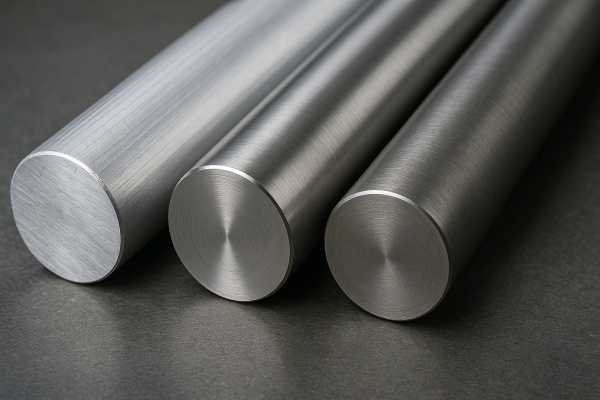
Outstanding corrosion resistance protects structural capacity over time. Titanium’s passive oxide film shields against seawater, chlorine, and many acids, limiting degradation in harsh service. That intrinsic protection often eliminates coatings and reduces maintenance, cutting lifecycle cost while improving reliability. We lean on this advantage in chemical processing and marine systems.
Understanding how titanium alloys stack up against other widely used engineering metals is crucial for informed material selection. Their unique combination of properties often positions them as a superior choice despite higher initial costs.
Titanium alloys strike a compelling balance. While some high-strength steels can match or exceed titanium’s absolute tensile strength, titanium’s much lower density yields a superior strength-to-weight ratio—so parts can be significantly lighter at equivalent strength. For instance, Ti-6Al-4V is about 4.43 g/cm³ versus ~7.85 g/cm³ for steel. Aluminum alloys are lighter still (around 2.7 g/cm³), but they usually can’t match titanium’s strength, often forcing thicker sections that erode the weight advantage.
| Property | Titanium Alloy (Ti-6Al-4V) | High-Strength Steel (e.g., 4340) | Aluminum Alloy (e.g., 7075-T6) |
|---|---|---|---|
| Density (g/cm³) | 4.43 | 7.85 | 2.81 |
| Tensile Strength (MPa) | 895-1100 | 1500-1800 | 500-570 |
| Yield Strength (MPa) | 828-1000 | 1300-1600 | 430-500 |
| Strength-to-Weight Ratio (relative) | Very High | Moderate | Moderate |
| Corrosion Resistance | Excellent | Moderate (requires protection) | Good (requires protection) |
| High-Temp Performance | Good | Good | Poor |
Titanium maintains a meaningful portion of its strength and stiffness at temperatures where aluminum would soften and creep. While nickel- or cobalt-based superalloys win at the extremes (above ~600°C), titanium alloys are a lighter, often more economical choice for the intermediate range (up to about 550–600°C). Their oxidation and creep resistance in this window make them well-suited for jet engine hardware and exhaust components.
Choose titanium when you need high strength-to-weight, strong corrosion resistance, and dependable performance at elevated temperatures—think aerospace structures where weight directly impacts fuel burn and payload, or medical implants where biocompatibility and longevity are critical. Even with higher upfront material and processing costs, the gains in service life, reliability, and performance can lower total lifecycle cost. For information on choosing a supplier, you might find Beyond Price The Ultimate Guide To Choosing Your Titanium Supplier Parts Manufacturer helpful.
The inherent strength and unique properties of titanium alloys enable their use in a wide array of demanding applications across various industries. We see them in critical structural components, medical devices, and even consumer goods.
Aerospace leans heavily on titanium for its exceptional strength-to-weight and fatigue resistance. You’ll find it in airframes, landing gear, and engine components—including fan blades, compressor disks, and casings. Its ability to endure high temperatures and corrosive flight environments safeguards performance and longevity. The use of Titanium Alloy Products in modern aircraft cuts overall weight, improving fuel efficiency and extending range.
Biocompatibility and corrosion resistance set titanium apart in the medical field. The body typically accepts it well, reducing adverse reactions. High strength supports durable joint replacements and dental implants that withstand years of physiological loading. Its non-magnetic nature is MRI-friendly, and for instruments, the light weight and sterilization resilience are everyday benefits.
In chemical processing, titanium’s corrosion resistance suits heat exchangers, tanks, and piping that face aggressive media. Marine applications tap it for submarine components, offshore structures, and propeller shafts due to excellent seawater resistance. On the consumer side, the combination of lightness and strength is prized in high-performance sports gear, luxury timepieces, and premium automotive parts. If you are interested in the broader applications, consider reading Titanium And Titanium Alloys Widespread Application And Future Challenges.
At FOTMA, we provide high-quality titanium and other non-ferrous metal materials, backed by more than 30 years of technical accumulation. With modern production equipment and advanced testing methods, we deliver solutions that meet the most demanding engineering specifications. Whether you need custom titanium alloy components or practical engineering support for your next program, our team is ready to help. Contact us to discuss your requirements and see how our materials can elevate your product performance.
Email: bunny@fotma.com, export@fotma.com
Phone: +86 13995656368, +86 13907199894
Alex Chen is committed to helping clients get timely solutions and achieve peak performance from their products. Passionate about problem-solving and continuous improvement, Alex shares expert insights and practical guidance so customers can maximize the value of their purchases.
The strongest commercially available titanium options are typically beta alloys, such as Ti-10V-2Fe-3Al and Ti-15V-3Cr-3Sn-3Al. With appropriate heat treatment, they can exceed 1200 MPa (175 ksi) in tensile strength, making them suitable for applications that demand maximum load-bearing capacity.
Yes. Processes like solution treatment and aging (STA) can significantly raise strength. The alloy is solutionized at high temperature, rapidly quenched, and then aged at an intermediate temperature to precipitate strengthening phases and refine the microstructure, boosting both tensile and yield strength.
Manufacturing can be demanding: high strength and low thermal conductivity hinder machining, so specialized tooling and parameters are required. Welding must be done with inert gas shielding to avoid contamination and embrittlement. Additionally, raw material and processing costs are generally higher than for many other metals.
Upfront costs are typically higher than steel or aluminum, but the superior strength-to-weight ratio, outstanding corrosion resistance, and long service life often repay that investment. In practice, this means fuel savings in aerospace, durable medical devices, and reduced maintenance in industrial systems—translating to compelling lifecycle value.
Titanium is non-toxic and recyclable, which is favorable environmentally. While extraction and processing are energy-intensive, long in-service lifetimes and durability reduce the frequency of replacement, cutting overall material use and waste. Recycling of titanium scrap continues to grow, further improving sustainability.